
An erection that did not go unnoticed, sending the debate high as a kite
Cannabis is neither hero nor villain. Like most things, it comes down to human choices and, fortunately or unfortunately, the law is part of that reality.

MALELANE, MPUMALANGA - On January 9, police uncovered a large dagga plantation near Malelane in Mpumalanga, as part of ongoing crime-prevention operations in the area. The discovery, estimated to carry a street value of close to R3 million, included the destruction of the plants on site and, as often happens these days, it also sparked a lively debate online.
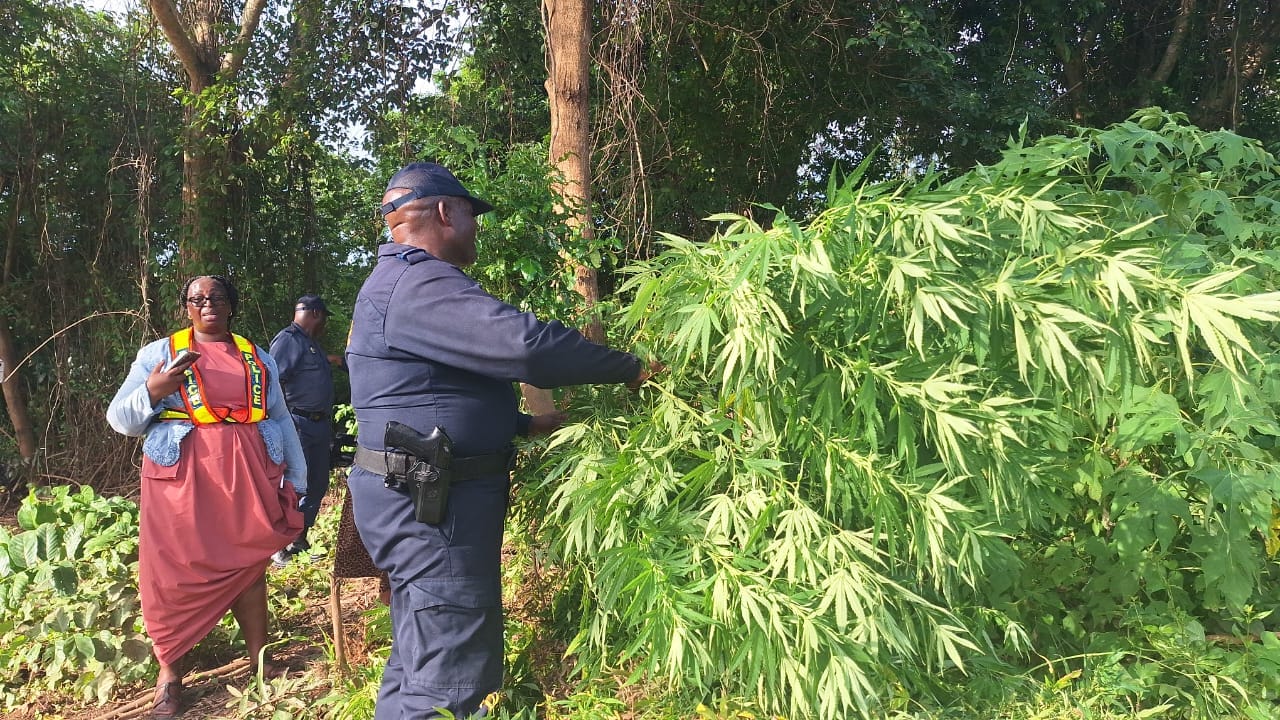
One comment in particular, from a person called Brian (thank you, Brian), stood out and ultimately sparked the interest for this article to be written. The comment was posted publicly and is quoted verbatim: "If you look at those plants carefully you’ll realise they’re all MALE : meaning they cannot produce buds or flower. Only FEMALE plants produce flowers, or what we call “buds” … of which contain all the psychoactive compounds associated with “getting high” (9-THC). They’ve essentially set fire a bunch of non-psychoactive cannabis plants. Landscaping? Sure. Drug Enforcement? Not even close."
To be clear, this journalist is not anti-cannabis, nor is my little black heart 🖤 pro-addiction.
South Africa’s legal framework around cannabis has evolved, and private use and limited cultivation are now part of the national conversation, but legality, as always, lies in the detail.
The legal reality in South Africa
A closer look at the law paints a clearer picture:
- Cannabis may be grown only for private use, and within reasonable, non-commercial limits;
- Large-scale cultivation, particularly open-field farming, remains illegal without authorisation;
- Cultivation along environmentally sensitive areas, such as riverbanks, is prohibited;
- Law enforcement does not differentiate between male and female plants when scale, location, or intent suggests organised cultivation.
In short, legality is determined by scale, purpose and location, not by the sex of the plant.
A quick botanical reality check
The commenter was not entirely wrong:
- Male cannabis plants do not produce smokable buds, however, they are essential for seed production, which supports commercial cultivation;
- Large plantations often include male plants intentionally;
- Destroying crops before flowering is standard practice to prevent further propagation.
Botany explains what the plants are, it does not legalise why they are there.
Where cannabis has shown real medical value
Beyond recreational use and legal debates, cannabis has also found a legitimate place in modern medicine:
- Chronic pain management, where cannabinoids have shown effectiveness, particularly in neuropathic pain;
- Anxiety and stress disorders, where controlled doses of certain compounds, especially CBD, have been linked to reduced symptoms;
- Epilepsy treatment, with cannabis-derived medications prescribed internationally for specific, treatment-resistant conditions;
- Muscle spasticity, especially in patients with multiple sclerosis;
- Nausea control and appetite stimulation for patients undergoing chemotherapy;
- Multiple delivery methods, including oils, capsules, tinctures and topical applications, allowing for controlled, non-combustible use.
In medical contexts, cannabis is not positioned as a cure-all, but as a therapeutic tool, often used when other treatments have failed or caused severe side effects.
Then there is the bigger conversation
Beyond legality and plant biology, there is a broader social question worth asking. Cannabis itself is not inherently harmful, nor is it automatically dangerous, but for individuals with a predisposition to addiction, whether low or high, cannabis can act as a gateway to more harmful substances, not because of the plant alone, but because of accessibility, escalation and environment. For some, it remains casual. For others, it becomes a first step into deeper dependency patterns.
This is where the debate moves beyond plants in a field and into questions of policy, control and responsibility. And on that note, the same argument can be applied to almost anything in the world. Ultimately, responsibility lies with the user or the party in control. Dagga cannot be made out to be the devil, because dagga, in and of itself, cannot do anything. It is how it is used, managed and regulated that determines its impact.
So where does that leave us?
Cannabis has earned its place in medicine cabinets and serious research journals. It can heal, it can help, and it can be part of a sensible, adult conversation. But a multi-million-rand field of plants next to a river is probably not the quiet, personal-use pot plant someone forgot to water. Cannabis has not yet earned automatic immunity from common sense. Somewhere between prohibition and plantations lies a reasonable middle ground, and that is likely where the real conversation should be happening.


