Why are we still not collecting DNA at birth?
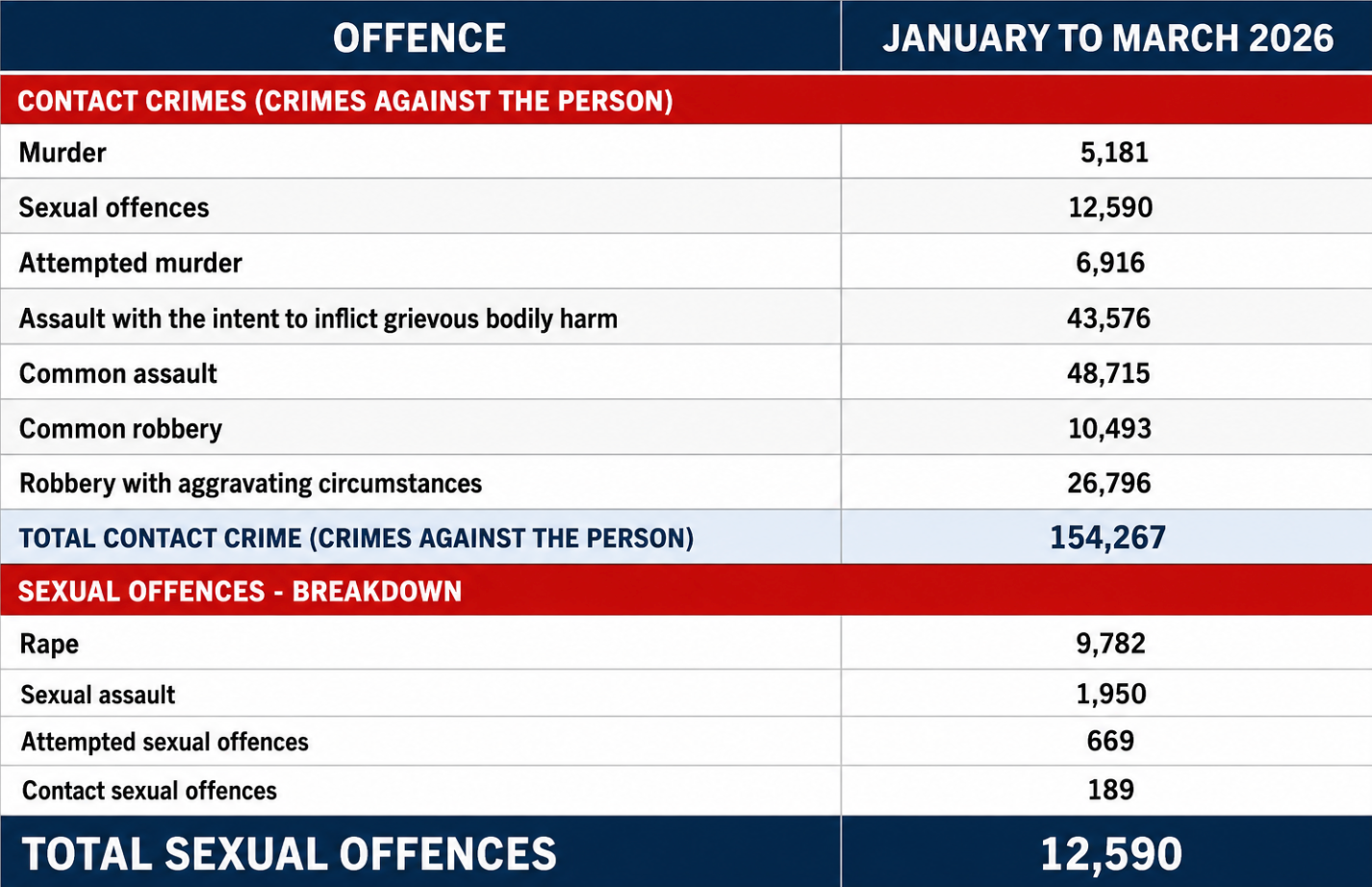
Nearly 60 murders and more than 100 reported rapes every day between January and March 2026: Why has SA not already passed legislation requiring every citizen's DNA profile to be recorded at birth and linked to their identity record?

South Africa recorded 5,181 murders between January and March 2026, which translates to an average of almost 60 murders every day. During the same period, the country also recorded more than 100 reported rapes per day.
After watching numerous documentaries, court cases and news reports over the years where DNA evidence solved crimes decades after they were committed, I recently went looking for information on South Africa's DNA database. The more I read, the more one question kept nagging at me.
Why has South Africa not already passed legislation requiring every citizen's DNA profile to be recorded at birth and linked to their identity record?
To me, it seems like one of the most obvious crime-fighting tools available, particularly in a country facing the levels of violent crime that South Africa does. We are constantly told that police resources are stretched, that detectives are carrying enormous caseloads and that investigations take time. What I struggle to understand is why we are not using every available tool to reduce the burden on a system that is already under immense pressure.
Time and again, we see cases online where investigators finally identify suspects, years or even decades after crimes were committed, because DNA evidence collected at the time could eventually be matched to a person. The evidence was there all along, but what investigators lacked was a name.
South Africa's current approach largely relies on collecting DNA from people who have already come into contact with the criminal justice system. That means investigators can recover DNA from a crime scene and still have no immediate way of identifying the person who left it behind. The investigation then continues through witness statements, tip-offs, interviews and countless other avenues, all of which consume time, money and manpower.
Imagine instead that DNA recovered from a rape, murder or kidnapping scene immediately points investigators towards a specific individual. Police work would still be required, but investigators would spend less time trying to establish who they are looking for and more time building a case.
The benefits would extend beyond violent crime. Missing persons could be identified more quickly, unidentified remains could be matched to families, paternity disputes could be resolved with certainty and identity theft would become far more difficult.
 Anchen Coetzee
The more I looked into the issue, the more I began to suspect that the real debate may not be about DNA at all. The three or four people I've spoken to immediately raised privacy concerns, yet South Africans already provide government and private institutions with enormous amounts of personal information. Birth registrations, fingerprints, identity documents, bank records, SIM card registrations and tax records already form part of everyday life. I mean, no one's life is really private anymore, is it?
To me, the real issue seems to be confidence in government rather than privacy. The concern raised repeatedly was the possibility of being falsely implicated, framed or caught up in a government system people no longer trust. I understand that concern, as South Africans we have certainly witnessed enough corruption, incompetence and abuse of power over the years to be sceptical.
At the same time, I have been at enough crime scenes to know how valuable a comprehensive DNA database could be when investigators are searching for answers and families are desperate for closure.
 Anchen Coetzee
The practical implementation is not difficult to imagine. A DNA sample could be collected when a child is born, including home births before a birth certificate is issued. The profile could then be linked to that individual's identity record and verified when applying for a Smart ID card at the age of 16. Existing citizens could be incorporated through a phased registration process over time.
Any system of this nature would require strict oversight, independent management, severe penalties for misuse and security measures of the highest standard. Constitutional objections will be raised and privacy concerns will be debated, as they should be. What should not happen is for the conversation to end before it has properly begun.
If there are compelling reasons why every child born in South Africa should not have a DNA profile linked to their identity record, then let those reasons be debated openly.
Until then, I will continue asking a question that seems remarkably difficult to answer.
Why are we still waiting for criminals to enter the system before collecting the one form of identification that could help investigators find them?

 Naomi Roebert
 Lynette Spencer
 Mariana Balt
 Liz Thorne